
Theodore Clement Steele, American, 1847–1926
1901
Oil on canvas
65.40 cm x 52.70 cm | 25 ¾ x 20 ¾ in
Framed: 96.52 cm x 85.09 cm | 38 in x 33 ½ in
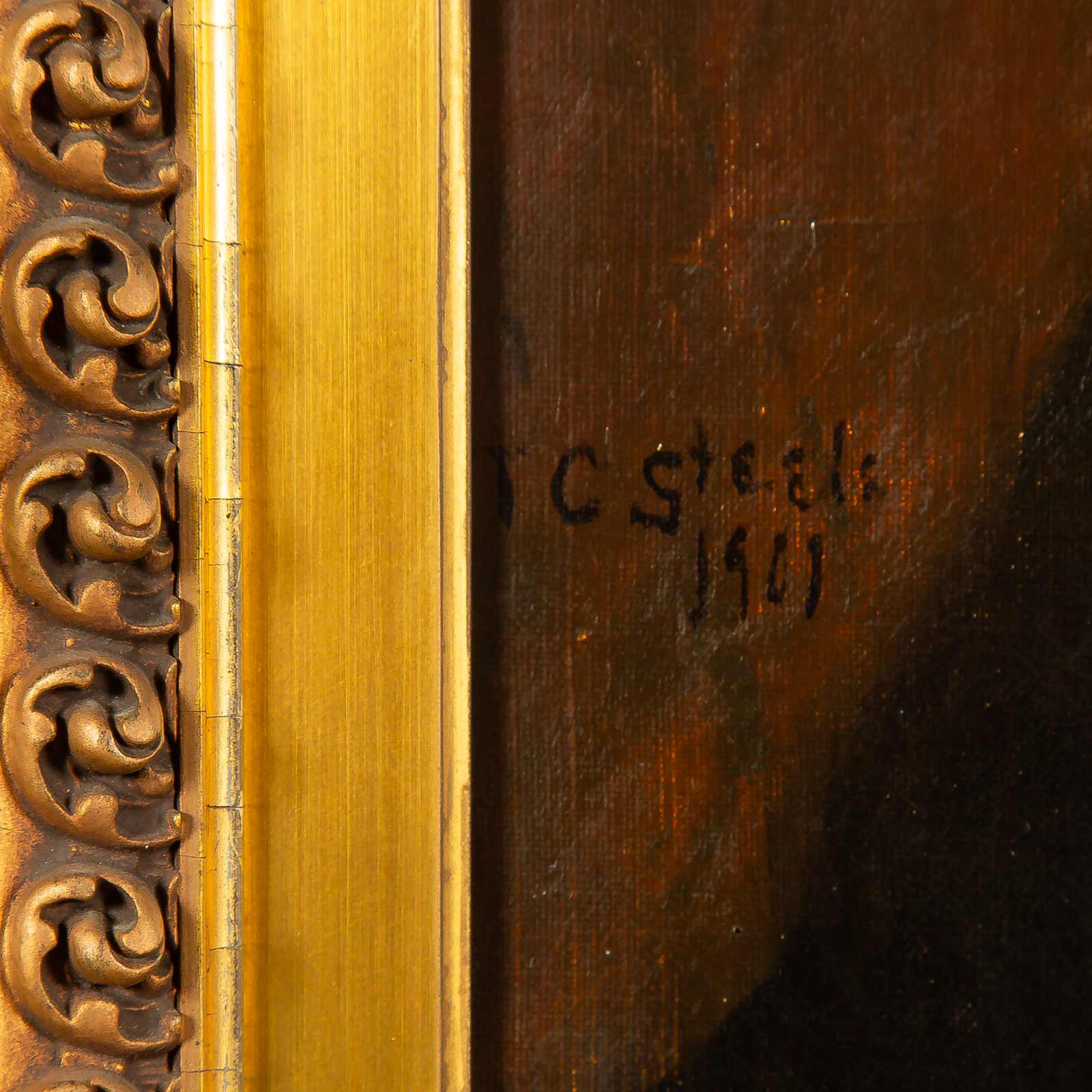
Signed and dated left, T C Steele 1901
Columbia Club Collection, Indianapolis, Indiana
Note: Portrait not available for public viewing.
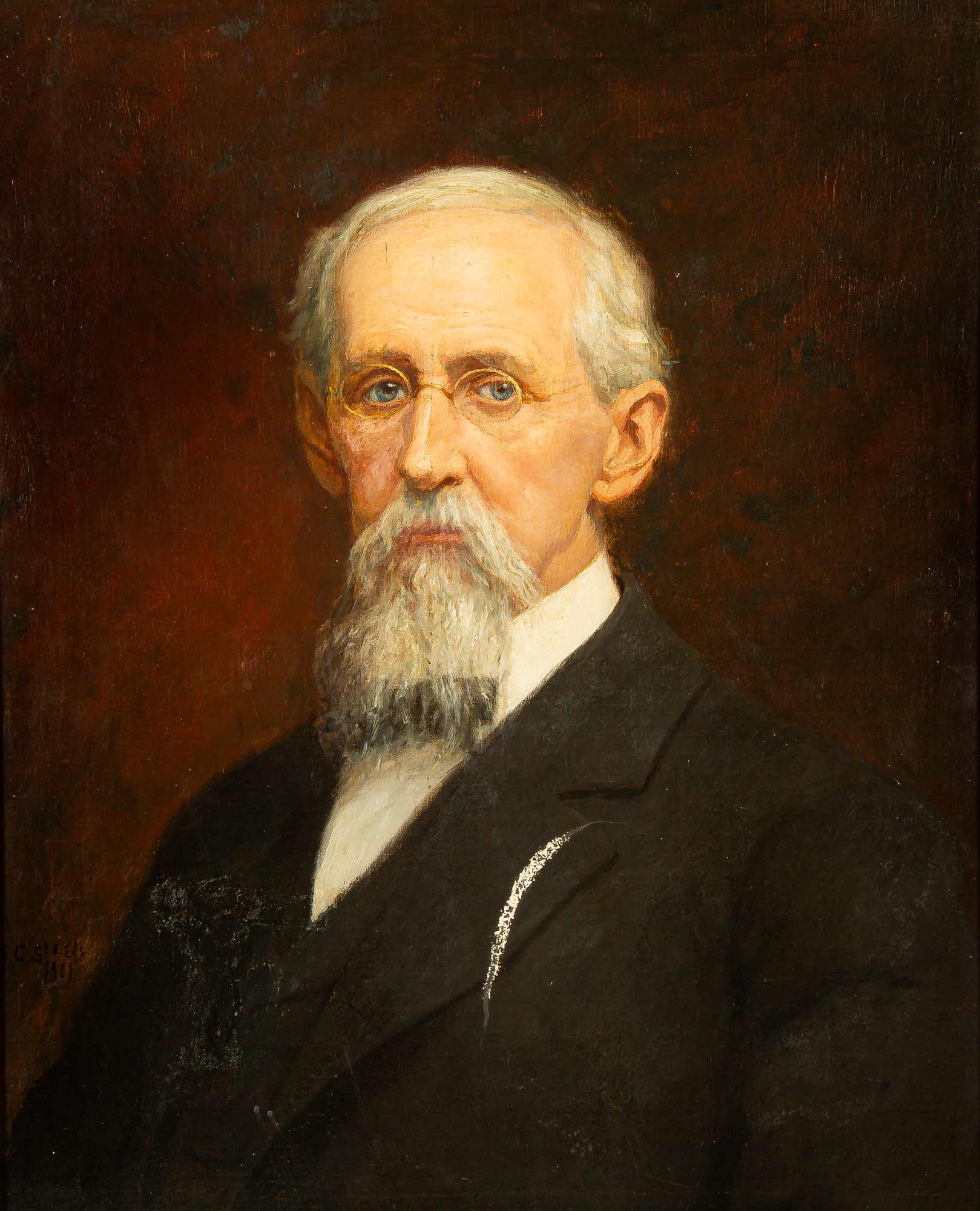
William Pinckney Fishback (1831-1901) was a remarkable man who made a lasting impact on the city of Indianapolis.
A lawyer by training, Fishback formed a law partnership in 1862 with Benjamin Harrison forming the firm of Harrison and Fishback. They were later joined by Albert G. Porter. Harrison would become the 23rd president of the United States (1889-1893), and Porter would become the 19th Governor of Indiana (1881-1885). T.C. Steele also painted portraits of both Gov. Albert Porter and President Benjamin Harrison. Fishback served as a commandant during the Civil War. He is commonly identifed as a primary commander of United States Colored Troops (USCT) regiments in Indianapolis.
Fishback was born in Batavia, Ohio, near Cincinnati and first attended Miami University in Oxford. When Miami’s president moved to Farmers’ College, Fishback followed him there and graduated in 1853. After being admitted to the bar in Ohio, he moved to Indianapolis in 1857. In 1858 and 1860 he was elected prosecuting attorney for Marion and six surrounding counties.1
From 1870 to 1874 fishback has a breif career in jounalism, as editor of the Indianapolis Journal, and later the St. Louis Democrat.1
Returning to Indianapolis in 1874, he resumed his partnersip with Albert G. Porter. He was elected Clerk of the United States Courts and Master in Chancery in 1877. He resigned the Clerkship after two years, but remained Master in Chancery until his death. Fishback made a considerable reputation by working for honest elections in the 1880’s and 1890’s.1
Fishback served as the first dean of the School of Law at the University of Indianapolis from its founding in 1894 until his death. (this University of Indianapois bears no connection to the modern University of Indianapolis, founded in 1902.) He was also a member of the faculty.2
This university existed from 1896-1935 and was a consortium of four existing private colleges. Butler College, Medical College of Indiana, Indiana Dental College, and Indiana Law School. Among the trustees was former President Benjamin Harrison, Founder of Eili Lilly, Col Eli Lilly, and Mayor Thomas Taggart. Plans to create a central campus and to expand the number of departments never materilized. Within a few years, each college began to find its own destiny.3
Fishback authored several book including A Plea for Honest Elections (1886), urging an end to election corruption in the state; The Lawyer in Luterature (1892); and Recollections Of Lord Coleridge (1895).
He was memorized by Hoosier poet James Whitcomb Riley (1849-1915) in his poem “William Pinckney Fishback”. Riley and Fishback were close friends and travleing campanions inlcuding trips to Europe.
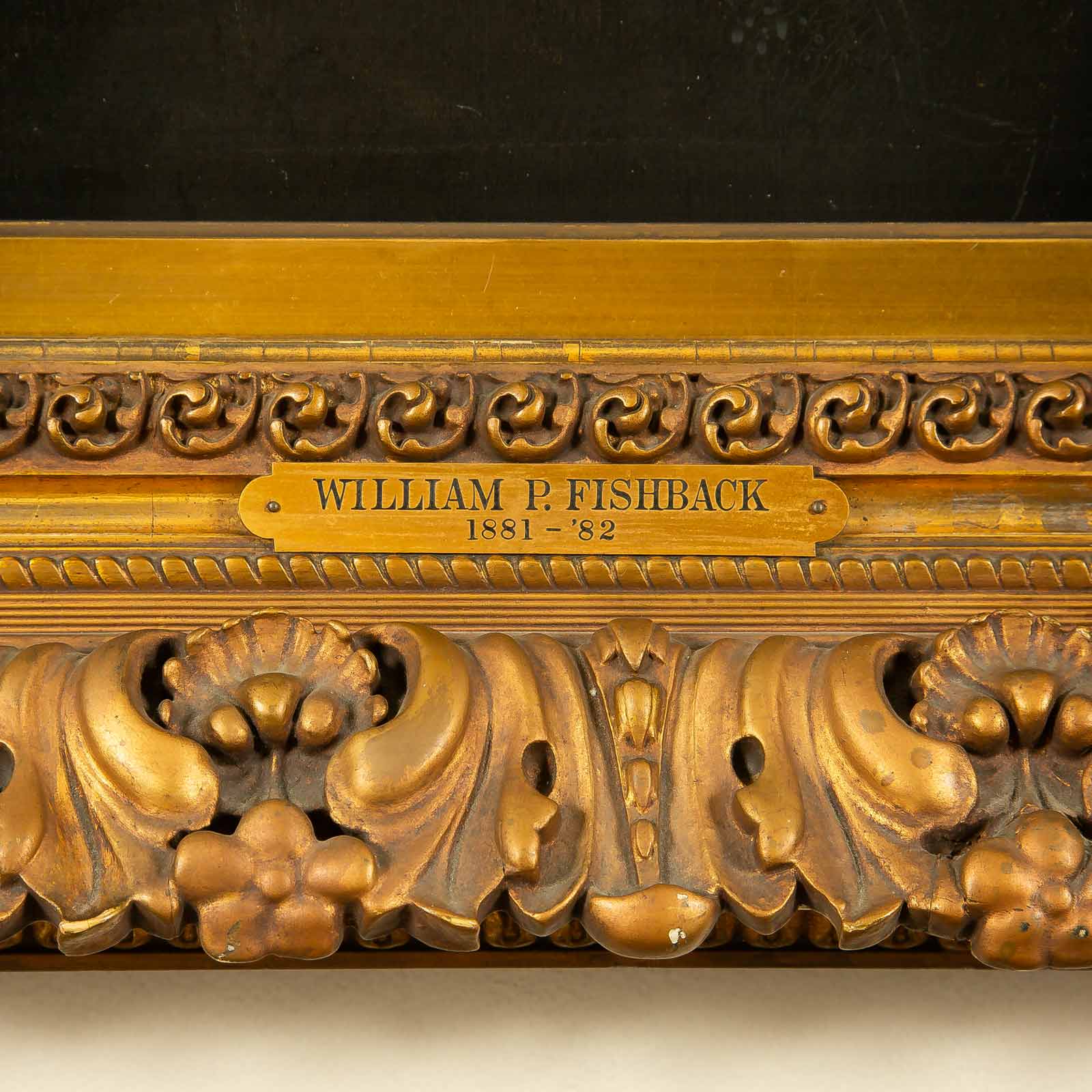
William P. Fishback 1881-‘82
William Pinckney Fishback
By James Whitcomb Riley
Say first he loved the dear home-hearts, and then
He loved his honest fellow citizen–
He loved and honored him, in any post
Of duty where he served mankind the most.
All that he asked of him in humblest need
Was but to find him striving to succeed;
All that he asked of him in highest place
Was justice to the lowliest of his race.
When he found these conditions, proved and tried,
He owned he marvelled, but was satisfied–
Relaxed in vigilance enough to smile
And, with his own wit, flay himself a while.
Often he liked real anger–as, perchance,
The summer skies like storm-clouds and the glance
Of lightning–for the clearer, purer blue
Of heaven, and the greener old earth, too.
All easy things to do he did with care,
Knowing the very common danger there;
In noblest conquest of supreme debate
The facts are simple as the victory great.
That which had been a task to hardiest minds
To him was as a pleasure, such as finds
The captive-truant, doomed to read throughout
The one lone book he really cares about.
Study revived him: Howsoever dim
And deep the problem, ’twas a joy to him
To solve it wholly; and he seemed as one
Refreshed and rested as the work was done.
And he had gathered, from all wealth of lore
That time has written, such a treasure store,
His mind held opulence–his speech the rare
Fair grace of sharing all his riches there–
Sharing with all, but with the greatest zest
Sharing with those who seemed the neediest:
The young he ever favored; and through these
Shall he live longest in men’s memories.
Fishback Road near Eagle Creek Park is named after him, and he is buried in Crown Hill Cemetery – both locations in Indianapolis, Indiana.


L: Fishback portrait is located on north wall of mezzanine; R: Plate mounted on wall next to painting reads: William P. Fishback, 1831-1901 Attorney and Newspaper editor Sixth President, Indianapolis Literary Club 1881-1882 T.C. Steele, 1901 On Loan from the Indianapolis Literary Club
The Columbia Club
The Columbia Club was established in 1888 as the Harrison Marching Society to support the candidacy of General Benjamin Harrison of Indianapolis as President. After Harrison won election in that year, the society decided to incorporate as a permanent organization and chose the name Columbia Club, based on the popular alternative name for America at the time.
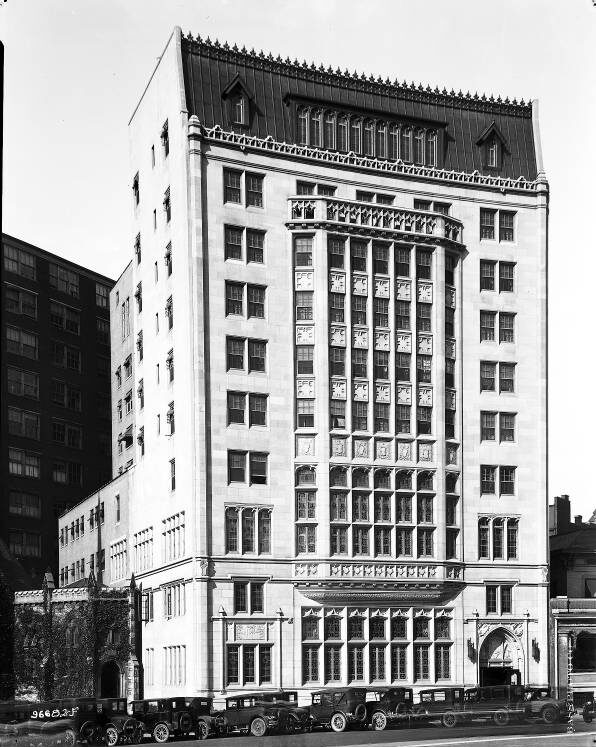
The Club has occupied three buildings at its prominent location on Monument Circle, and the current building opened in 1925. Designed in English Tudor style by the noted Indianapolis architects Rubush and Hunter and features lavishly appointed interiors with sculptures and plaster details by top Indiana artists.
The present building has hosted famous personalities and holds a tradition of important business and civic meetings being held at the club.
In 1926, Queen Marie of Romania was welcome to the city with a banquet at the Club, and the next year Charles Lindberg, the American Eagle, was honored at the Columbia Club for flying solo from New York to Paris.
In 1976, President Ronald Regan keynoted the annual Beefsteak Dinner held since 1891.
In the previous clubhouse the four founders of the Indianapolis 500 – Carl Fisher, James A. Allison and Arthur C. Newby met in 1909 at the Club and discussed building the Indianapolis Motor Speedway. In more recent years, the agreement to bring the Baltimore Colts to Indianapolis was finalized at a meeting in a Columbia Club suite.3
T.C. Steele was a member of the Columbia Club during the time he and his family lived in Indianapolis at Tinker Place (1885 – 1901).
The Columbia Club was added to the National Register of Historic Places in 1983.
Footnotes
1 Indiana Historical Society, William Pinkney Fishback Papers, 1852-1901.
2 Encyclopedia of Indianapolis, Todd McDorman,1984.
3 Grokipedia – University of Indianapolis
4 The Project Gutenberg eBook of Index of the Project Gutenberg Work of James Whitcomb Riley, by James Whitcomb Rilery
5 History of Greater Indianapolis: The History, the Industries, the Institutions, and the People of a City of Homes, Volume I, Jacob Platt Dun, Lewis Publishing Company, 1910, pg. 251.
6 Indiana Historical Society, W.H. Bass Collection.
Special Thanks to The Columbia Club